

Passover in Provence
Why South France is a surprisingly perfect place to spend the holiday

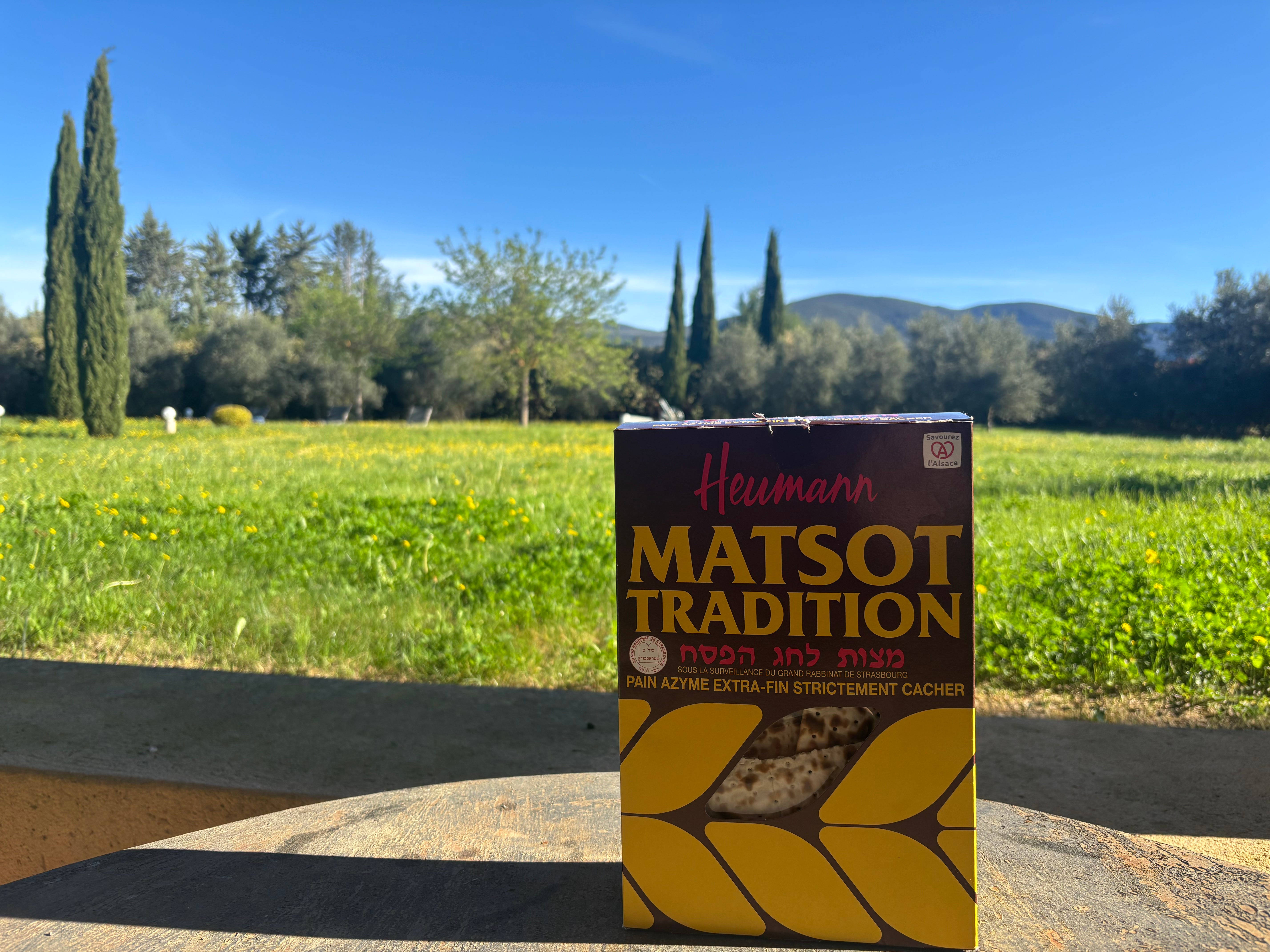
NOTE: The Yoniverse has not been swallowed by a black hole. I just took a brief hiatus during the Passover holiday. Weekly posts will resume…now.
There are a lot of obvious places to spend Passover: your grandparents’ home, an overpriced resort program, or Israel (when there isn’t a war). Anything to liberate yourself from the bondage of cleaning out every last crumb of chametz in your home.
Well, I’m here to let you in on a little secret about the incredible place I spent the holiday with my family this year: Provence.
Spring is a great time to go to Europe. It’s not the high season, so places aren’t super crowded and overpriced. But the big cities are not ideal for spending Passover. If you’re not eating at restaurants in observance of the holiday, you’re surrounded by everything you can’t eat: baguettes in Paris, pizza in Rome, and…well, you’re not really missing anything in London.
Lately, there’s also another uncomfortable reality: many of the major European cities are rife with antisemitism, with synagogues and kosher restaurants being attacked by terrorists and angry mobs, especially on Jewish holidays.
But the South of France provides a refuge from many of these problems. First, there’s a strong existing Jewish community, made up mostly of North African Jews who are very proud and visible. This means that there are plenty of kosher restaurants, supermarkets, and butchers1, something not to be taken for granted in Europe. We spent the first night of Passover at a communal seder in the synagogue of Aix-en-Provence, with excellent food and a large, welcoming crowd. While many Jewish communities in Europe feel like they are shrinking, the Jews of southern France feel grounded and at home. Part of this may be related to the region’s extensive Jewish history.
One of the highlights of the trip was visiting the ancient synagogue in Cavaillon, where a Jewish community existed as far back as the 13th century. You can walk down Rue Hébraïque and step into a synagogue that once sat at the center of a tightly packed ghetto, where Jews were forced to live within a single enclosed street.


Inside, the limited space led to a design you will not see anywhere else. The ark sits at the front, as expected, but the prayer leader’s platform is elevated above on a balcony, creating a layered, almost vertical structure.


The beauty of the space contrasts sharply with the conditions people lived under. The entire community, around 150 people, was confined to a tiny alley with gates at both ends. In the Middle Ages, Jews here were required to wear yellow badges and distinctive pointy hats, and were restricted to a narrow set of professions.
And yet, they endured. After the French Revolution, they were granted citizenship and allowed to disperse. Standing there, it was hard not to consider that, as hard as things may feel today, our ancestors went through so much more. And yet, they preserved their identities anyway, against all odds. The story of Jewish bondage and liberation was not one that ended with the Exodus, but rather has kept repeating over and over ever since.


But Provence is not just about its (occasionally depressing) Jewish history. The produce alone makes a strong case for spending Passover in the region.
Seriously, it’s on another level. Every village has its own farmers market on different days, and the fruits and vegetables are so good that you stop thinking about the croissants you’re missing.
I know it’s obnoxious when people say things like, “You haven’t tasted a [insert fruit or vegetable] until you’ve tasted one in [insert country],” but I’m gonna say it anyway. You haven’t tasted a strawberry until you’ve tasted one in Provence. They literally taste like Fruit Roll-Ups or Jolly Ranchers. I mean, look at these:
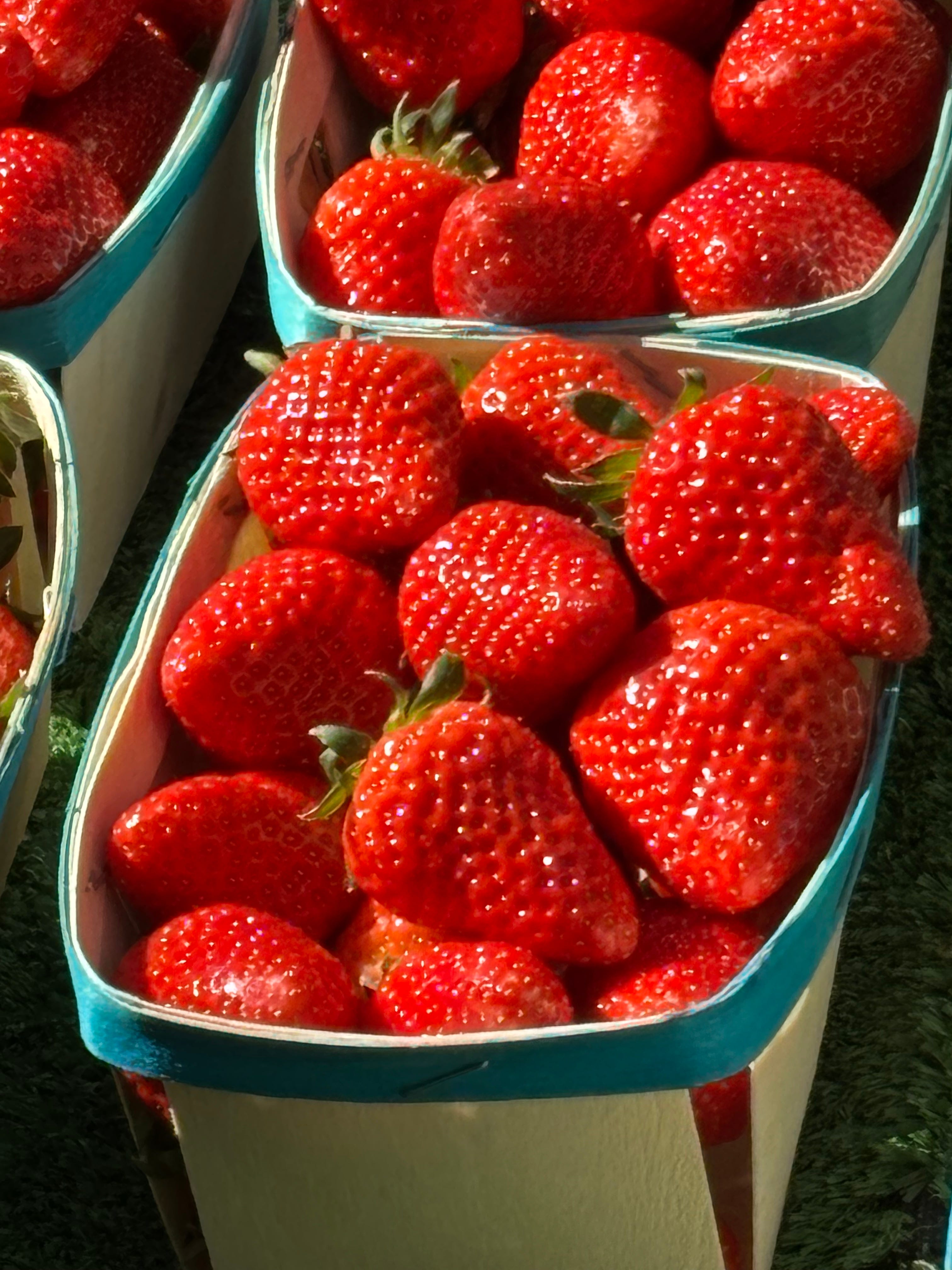
Imagine eating them every day. You can almost forgive the whole pointy hat thing. You’ll never be more excited to eat asparagus. Even the matzah was delicious. And only in France can you buy kosher foie gras to spread on it (sorry, geese). Eating on Passover is typically a frustrating ordeal, but not in Provence. By the time Passover ended and we could eat at restaurants again, it was almost disappointing.
Beyond all that, Provence is simply one of the most beautiful places I’ve ever visited. The little villages are each picturesque in their own way, blending in seamlessly with the surrounding nature. It’s no wonder that impressionist artists like Paul Cézanne made such amazing art here.


So while we end each seder with “Next year in Jerusalem,” if you can’t make it to the Holy Land, I recommend considering “next year in Provence” as well.
Mostly located in Marseille and the Riviera towns like Nice, Cannes, and Juan-les-Pins